The AVS Journal
Using Twilight Photos Alongside Daylight Photography
Daylight and twilight photographs can explain different aspects of the same property. Use daylight for clear architectural and setting information, then add twilight where evening lighting or outdoor atmosphere contributes a meaningful additional view.
Assign each image a distinct role
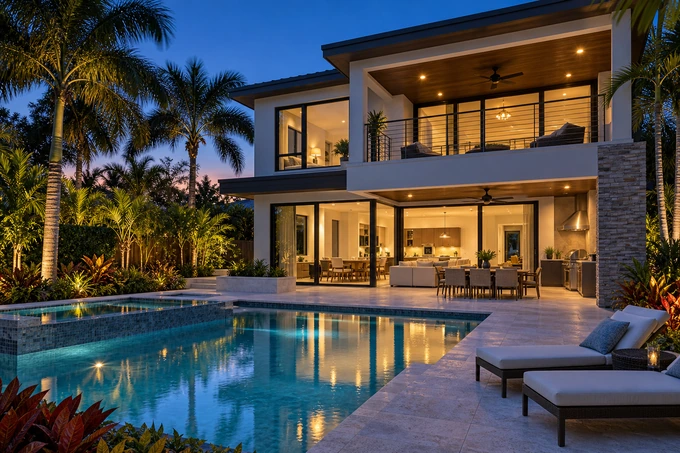
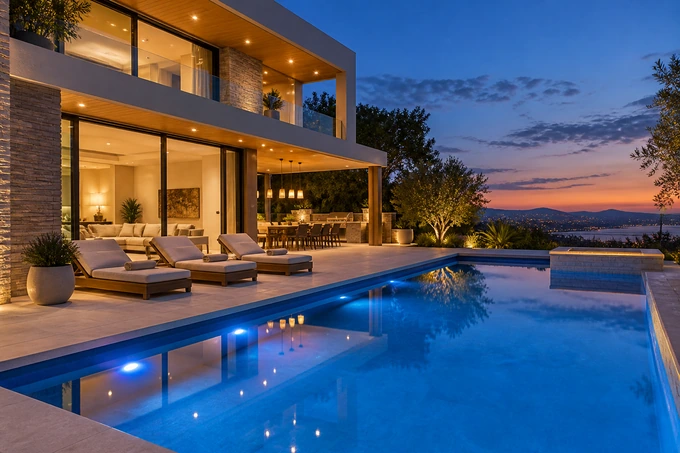
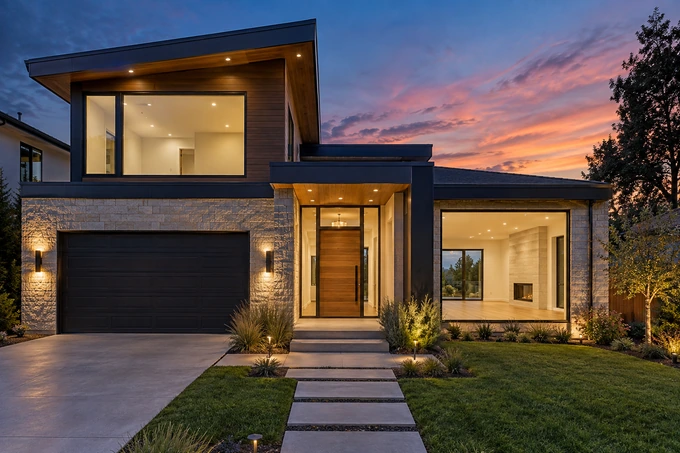
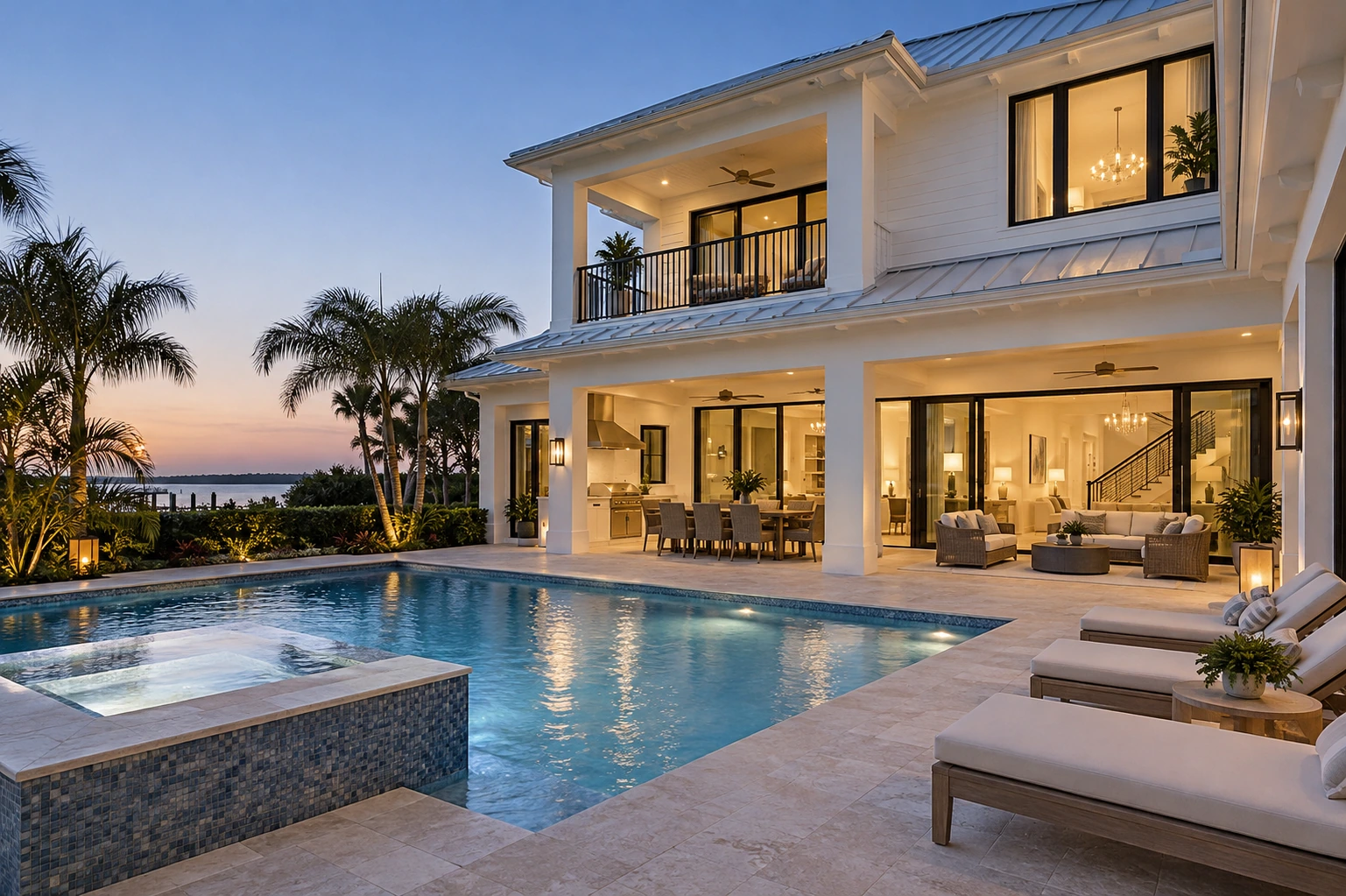
A daylight exterior can establish the building and arrival, while a twilight view may connect illuminated interiors to a terrace or pool. Choose images that add information rather than duplicate the same composition without a purpose. The gallery should remain a coherent introduction to the property, not a catalog of every lighting variation.
Keep preparation and property details consistent
Furniture, portable decor and visible conditions should align between sessions where possible. If something significant changes, discuss how the difference will be represented. Do not let a later evening photograph imply a feature or arrangement absent from the current property. Review both sets together before publication.
Choose placement around the story
A strong twilight image may lead if it remains clear at small size, or it may close an exterior sequence after daylight views establish the home. There is no mandatory order. Consider the destination's crop and how the next photograph develops the introduction rather than switching mood without useful context.
Example: a front exterior and rear pool sequence
An illustrative gallery could begin with a daylight front view, move through the rooms and outdoor layout, then end with a twilight pool view. Another listing might lead with that evening image. Both choices can work when the sequence explains the property accurately and avoids near-duplicate filler.
Combine the two sessions
- Give daylight and twilight images different jobs.
- Maintain consistent preparation and descriptions.
- Review the cover at thumbnail size.
- Remove repetitive views that do not add information.
Frequently asked questions
Should the same angle be photographed in both conditions?
It can be useful for a meaningful comparison or alternate cover, but not every angle needs a duplicate. Plan around the features that benefit from each view.
Can twilight replace a complete daylight gallery?
Usually it serves as a complement. Buyers still need clear views of the rooms, architecture and surroundings that evening atmosphere alone may not explain.